

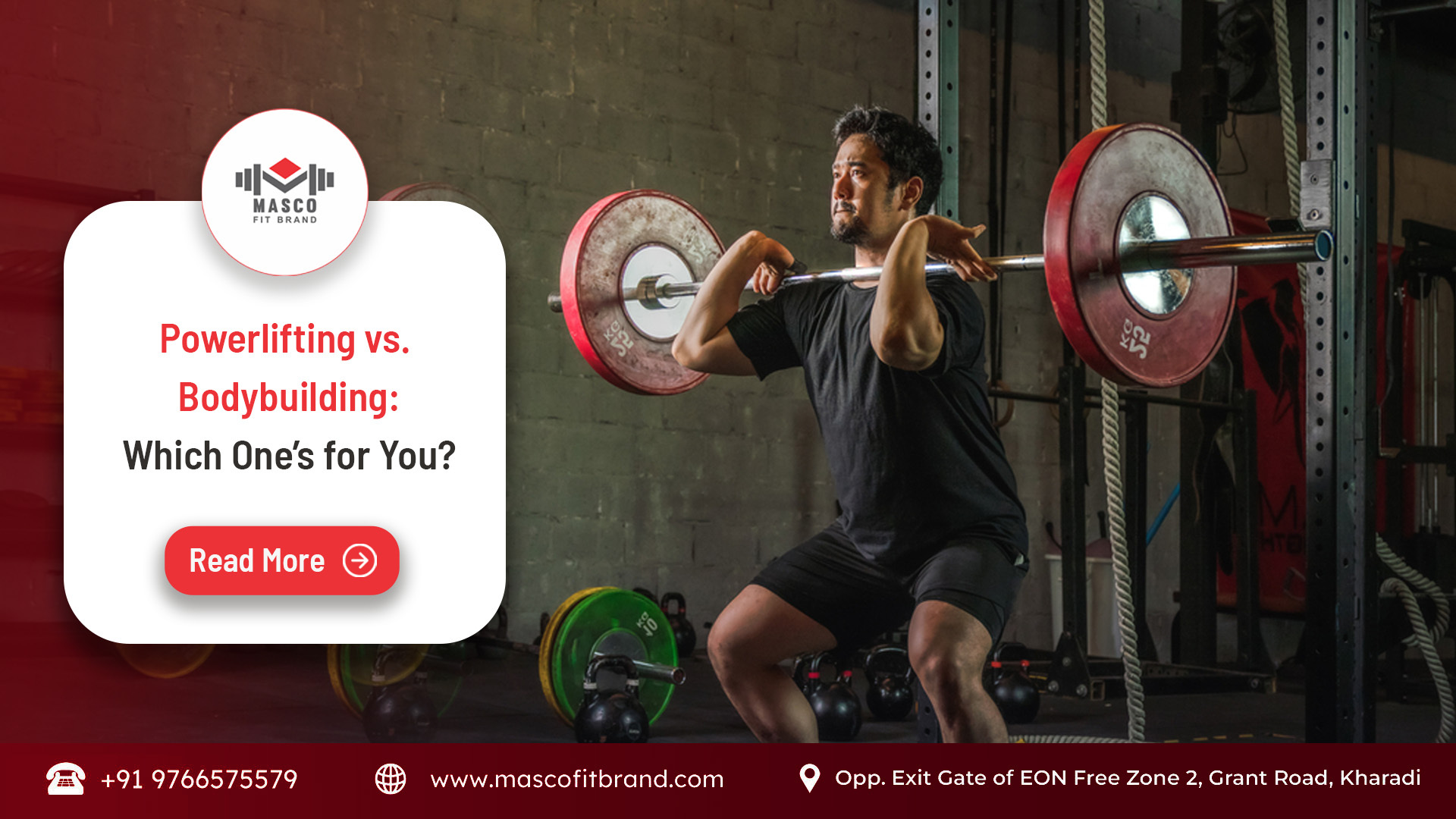
In the matter of strength training there are two giants who rule the fitness world- Powerlifting and Bodybuilding. Although both sports may include weight lifting, the difference between them is enormous in terms of goals, training programs, diet, and even mental attitude. If you are new to the gym or you just want to change your training, you may be interested in the differences between powerlifting and bodybuilding to choose what direction is better to follow in your fitness life.
What Is Powerlifting?
Powerlifting is a strength sport concerned with the maximization of raw power in three lifts:
- Squat
- Bench Press
- Deadlift
The athletes are evaluated based on their one-rep max (1RM), which is the greatest weight that they can lift in one repetition in each of these lifts. Powerlifting involves nothing but brute force, technique and mechanical efficiency.
Goals of Powerlifting:
- Maximize strength in compound lifts
- Improve mechanical form
- Progressively overload the central nervous system
What Is Bodybuilding?
Bodybuilding, on the other hand, is the art and science of muscle hypertrophy—increasing muscle size and symmetry. The goal isn’t just to lift heavy but to sculpt the body to its aesthetic peak. Bodybuilders are judged on muscular development, definition, proportion, and stage presentation.
Goals of Bodybuilding:
- Enhance muscle mass
- Achieve low body fat percentage
- Improve muscular symmetry and aesthetics
Training Style: Strength vs Aesthetics
Powerlifting Training Style:
Powerlifters focus on low-rep, high-weight training with long rest periods. The typical powerlifting workout includes:
- 3–5 sets of 1–6 reps
- Heavy compound movements
- Focus on explosive strength and CNS (central nervous system) adaptation
- Technical mastery and perfect form under load
Accessory exercises are kept minimal or functional—used only to improve the main three lifts.
Bodybuilding Training Style:
Bodybuilders train for volume and muscle pump, often using moderate weights with 8–15 reps per set.
- 5–6 exercises per muscle group
- High sets (4–5 per exercise)
- Shorter rest times to maximize hypertrophy
- Isolation and compound movements
The emphasis is on the mind-muscle connection, time under tension, and working every muscle from different angles.
Nutrition: Fueling Strength vs Fueling Size
Powerlifting Nutrition:
Powerlifters often eat to fuel performance and support recovery. The focus is on:
- High protein intake (1.6–2.2g/kg of body weight)
- Adequate carbs for energy
- Higher calorie intake, especially in the off-season
- Supplements like creatine, caffeine, and beta-alanine for strength
Leanness is not a priority; instead, being in a caloric surplus is often necessary to keep progressing in strength.
Bodybuilding Nutrition:
Bodybuilders meticulously plan their diet around muscle gain and fat loss cycles—known as bulking and cutting.
During a bulk:
- High protein + moderate-high carbs
- Caloric surplus to gain lean muscle
During a cut:
- Slightly higher protein
- Caloric deficit to reduce body fat
- Supplements like BCAAs, whey protein, and thermogenics
Every calorie is tracked to maintain lean muscle while shredding fat.
Body Composition & Aesthetics
Powerlifter’s Physique:
Powerlifters also possess more dense and thicker physique, commonly around the core and lower-body. The aim is not muscle definition, it is functional mass. Their bodies might not be as cut, but their muscles are very strong.
Bodybuilder’s Physique:
Bodybuilders are normally vascular, lean and very defined. They have symmetrical muscles and every group is aesthetically developed. Much attention is paid to body composition, particularly during the competition season.
Mindset & Community
Powerlifting Mindset:
- Competitive spirit focused on outlifting others and beating personal records
- Tactical and mechanical thinking
- Emphasis on grit, progression, and resilience
The powerlifting community is tight-knit, supportive, and often training in strength gyms with loud music, chalk, and focused energy.
Bodybuilding Mindset:
- Highly disciplined, especially during cutting phases
- Visual and aesthetic-oriented
- Requires mental toughness for strict dieting, posing, and isolation training
Bodybuilding culture emphasizes self-discipline, self-image, and individual growth, often tied to personal development and lifestyle identity.
Injuries and Recovery
Powerlifting Injury Risks:
- Due to lifting maximal loads, there’s a risk of injury in the lower back, shoulders, and knees
- Recovery is critical—often includes scheduled deload weeks, massage therapy, and mobility drills
Bodybuilding Injury Risks:
- More repetitive strain injuries from overuse or improper form in isolation exercises
- Overtraining can lead to fatigue and hormonal imbalances
Bodybuilders usually incorporate active recovery, stretching, and split routines to avoid overworking any one muscle group.
Competitive Landscape
Powerlifting Competitions:
- Divided by weight class, age, and gender
- Governed by rules on form (e.g., squat depth, bench pause)
- Lifters get three attempts per lift to hit their max
- Competitions are straightforward and judge on performance only—not how the lifter looks.
Bodybuilding Competitions:
- Divided by categories: Physique, Classic Physique, Bodybuilding, Bikini, Wellness, etc.
- Judged on symmetry, muscularity, posing, stage presence, and conditioning
- Prep involves months of dieting, posing practice, tanning, and sometimes water depletion for peak aesthetics.
Which One Burns More Calories?
- Powerlifting burns fewer calories during a session due to longer rest and lower rep counts
- Bodybuilding workouts are more metabolically intense and can lead to higher overall calorie burn, especially during high-volume or superset training
- That said, both can be adjusted with cardio or conditioning to meet specific calorie goals.
Final Thoughts: Which One’s for You?
At MASCO Fit Brand, we believe that fitness is deeply personal. Whether you’re looking to be the strongest version of yourself or the most sculpted, both powerlifting and bodybuilding have immense benefits.
Choose Powerlifting if:
You want to unleash raw strength and feel the thrill of crushing heavy PRs.
Choose Bodybuilding if:
You love sculpting your physique and want to develop mind-muscle control and aesthetic dominance.
Or—why not do both in a balanced way? Many of our members follow hybrid routines that bring the best of both worlds. Our expert trainers can help you tailor your plan based on your personal goals, be it strength, size, or stage-readiness.