

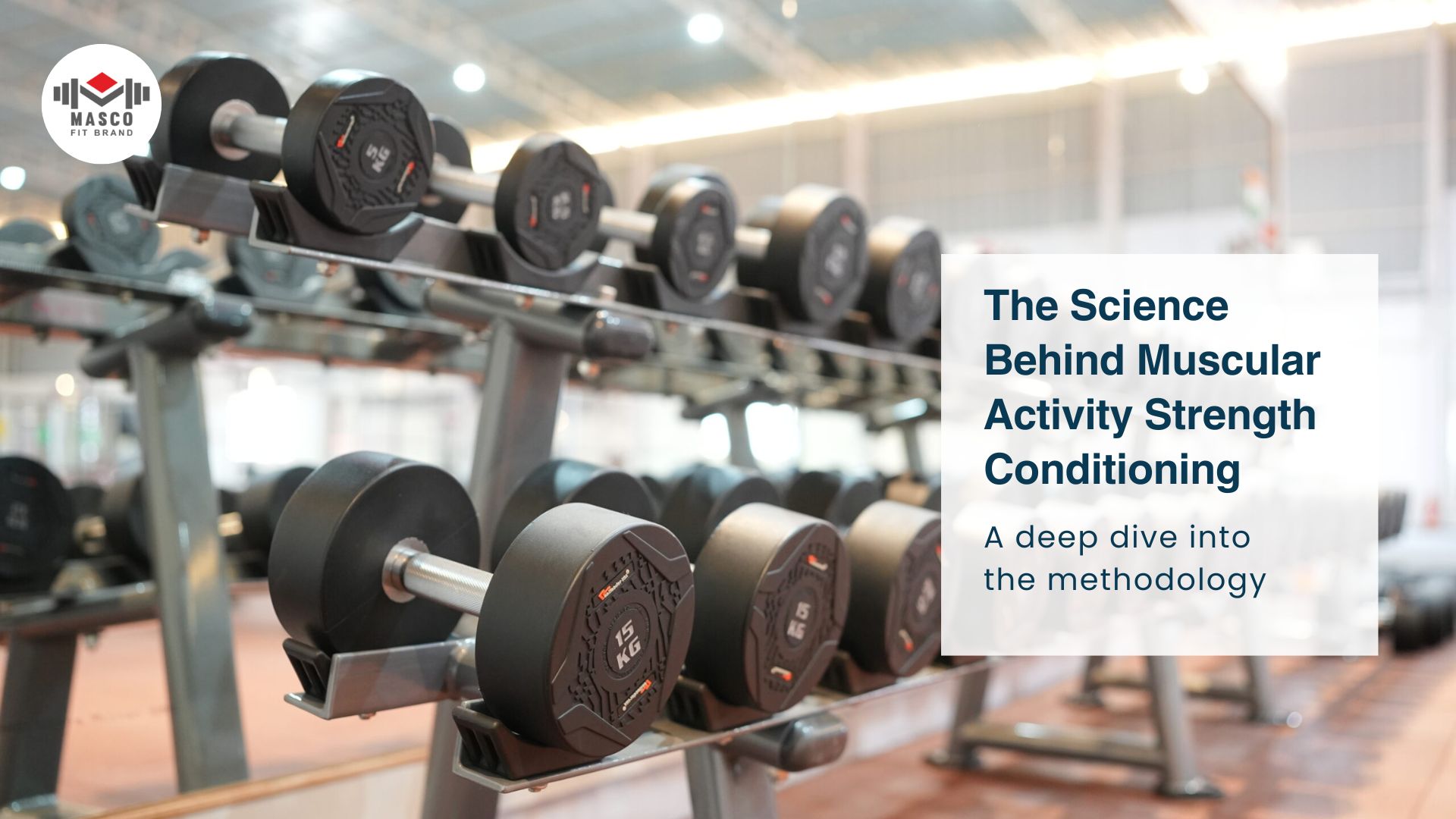
The Science Behind Muscular Activity Strength Conditioning – A deep dive into the methodology
Are you looking to push your limits and build strength in ways that transcend traditional training? Muscular Activity Strength Conditioning (MASC) could be your answer. Muscular Activity Strength Conditioning (MASC) may be the one that you are looking for. As the program evolved to help muscles build and perform at their best, MASC is based on scientific approaches that are different from muscle gains alone. It aims at endurance, power and the related robustness in a sophisticated approach to techniques. In this article, we will explain what Muscular Activity Strength Conditioning is and how it differs from traditional training techniques.
Understanding Muscular Activity Strength Conditioning (MASC)
Muscular Activity Strength Conditioning, or MASC, is an efficient training technique which includes elements of obligatory strength training and intense interval training as well as functional movements. The intention is not only to build slabs of muscles and monstrous strength, but also to improve overall sport specific performance and stamina. As opposed to other typical regimes of Weightlifting, MASC utilizes different types of exercise to elicit physiological adaptations and ensure the necessary constantly challenged muscle groups.
How MASC Differs from Traditional Strength Training
Unlike the conventional strength training, which emphasizes individual workouts and attempting to attain peak hypertrophy (muscle enlargement), MASC is more comprehensive. It merges features such as plyometric movements, calisthenic movements, and compound exercise movements hence enhance neuromuscular improvements on energy systems. The training is serial and adaptive to develop functional strength applicable for normal activities and sporting disciplines by athletes and fitness lovers.
The Physiology of Muscular Strength: How Muscles Adapt
Muscle adaptation is the key to strength gains, and it occurs through two main processes: hypertrophy and neurological changes. Hypertrophy involves the getting larger of muscle fibers resulting from the deposit of extra muscular proteins while neurological adaptations concern the capacity of the nervous system to activate motoneurones and to synchronize muscle contractions.
- Muscle Hypertrophy: The Science of Growth: When muscles are placed under increasing pressure, then small areas of the muscle tissues break or tear. The body then restarts repair of these fibers and in the process, they are actually made to be thicker and stronger. This process is called hypertrophy and is a principle of strength conditioning.
- Neural Modifications and Motor Unit Activation: It is important to note that a certified personal trainer has vast information regarding exercise science, correct technique and program design for workouts. They correct you when you are not doing the exercises properly this reduces chances of injury while at the same time helping you get the maximum effect of the exercise. Although this advice is valuable in general, it is particularly useful if one is unsure of the right procedure or how to structure your training.
- Muscle Fiber Types and Its Relation to Strength Conditioning: Muscles contain two primary fiber types: Skeletal muscle has been subclassified into Type I (slow twitch) and Type II (fast twitch). MASC employs various degrees of training with the aim of both developing this Type I and explosive power of Type II.
Energy Systems in Muscular Activity Strength Conditioning
Knowledge of the generation and application of energy in the human body is critical in forming of MASC program. MASC engages all three energy systems to ensure comprehensive conditioning:
- ATP-CP System: Delivers working energy for short_repository bursts such as lifting heavy things or sprinting.
- Glycolytic System: Provides energy for activities lasting between 30 seconds to about 2 minutes of vigorous exercise such as high rep strength sets or intense interval training.
- Oxidative System: Continues longer activities, for example, endurance cards.
Every system is trained using HIIT with focused compound lifts as well as low-intensity steady-state cardio.
Principles of Muscular Strength Conditioning as Follows
To maximize results, MASC adheres to the following core principles:
- Progressive Overload: In essence, when one begins a training program, they apply more lactate resistance, reps or intensity which puts muscles on notice that they have to metamorphose in some way.
- Specificity: Exercise for respective activity to elevate the specific muscles used in training and hence develop the muscle strength required in that particular sport or game.
- Periodization: Organizing training into cycles in order to control the volume, intensity and recover process for achieving the long term progress.
The Techniques and Training Strategies in MASC
MASC combines a variety of training techniques to engage different muscle groups and energy systems:
- High-Low-Medium Intensity Interval Training: This enables all the muscle fibers to be pulled into operations, building strength and endurance as well as provide a work out that is as challenging as it is varied.
- Plyometrics and Power Development: Including jump training and explosive movements for improvements of speed and power.
- Calisthenics and Bodyweight Conditioning: Improves individual general fitness using body weight to do exercises that strengthen the abdominal wall and back muscles.
- Combining Strength with Cardiovascular Endurance: For the balance fitness action, they should incorporation of running, rowing or biking when doing strength circuits.
Role of Functional Movements in MASC
Functional training is a cornerstone of MASC because it prepares the body for real-life movements:
- Benefits of Multi-Joint Exercises: Develops more than one muscle group resulting to coordination and balance.
- Improving Core Stability and Balance: Targets, therefore, its capacity within the stability of the body during series of motion.
- How Functional Training Enhances Athletic Performance: Develops better movements and velocity amongst athletes to boost muscle strength.
Analyzing Performance Metrics: Tracking Progress in MASC
Accurate tracking is essential for understanding progress and areas of improvement in MASC:
- Strength Testing: The ability to measure the actual exercise strength can be defined through the help of one-rep max and multi-rep tests.
- Monitoring Body Composition Changes: Performance of an objective evaluation of lean muscle gain and fat loss.
- Measuring Power and Endurance Gains: Measures such as the standard vertical jump height or set race times.
Injury Prevention and Recovery in MASC
Injury prevention is key in any high-intensity training program:
- Common Mistakes and How to Avoid Them: Misleading movements and exercise regimes that overwork the muscle tissues are blamed for the problem. MASC coaches pay much attention to technique and a gradual increase in load or intensity.
- Importance of Mobility and Flexibility Training: This guarantees the health of the joints through addition of stretching and mobility drills.
- Recovery Protocols: Applying vigorous restorative process, correct diet and, adequate sleep to enhance the performance.
Scientific Research Supporting MASC
Muscular Activity Strength Conditioning has been supported by research, with a lot of works emphasizing HIIT, functional training, and strength conditioning in muscle hypertrophy and endurance. The sum of these aims results in better parameters of the general health profile, such as the civil cardiovascular endurance, metabolic consequences and susceptibility to chronic diseases.
How MASCO Can Help You Achieve Your Goals
MASCO, a leader in fitness training, takes a comprehensive approach to Muscular Activity Strength Conditioning. With state-of-the-art facilities, highly trained professionals, and a science-backed methodology, MASCO helps you unlock your true potential. Whether you are an athlete seeking peak performance or a fitness enthusiast looking to enhance your strength and stamina, MASCO’s structured programs provide the expertise and support needed to achieve your goals.
CONCLUSION
Thus, Muscular Activity Strength Conditioning or, shortly, MASC is greater than a simple trend of contentious methods – it is the efficient and reliable way which is encouraged and verified by the selection of the scientific fund of the humanity. As a result, MASC has constructed a progressive system that embraces principles such as progressive overload, energy system training, and functional movements in accordance to the goal of fitness training. The effectiveness of the techniques make it possible for practitioners to not only gain muscles but also achieve enhanced athletic performance and minimized possible risk of an injury.
In case as you consider the role of MASC in bringing the change please do remember that it is all about the right guidance and training environment. We always strive to offer professional guidance, specialized plans, and people’s support for your fitness journey in MASCO. These tips herald the science of muscular strength conditioning and the ways through which MASCO can transform your training session.
Get started today, and unlock your potential!
Ready to redefine your limits? Join MASCO today and experience a revolutionary approach to strength conditioning. Let us guide you on your journey to better performance, improved health, and a stronger you.